
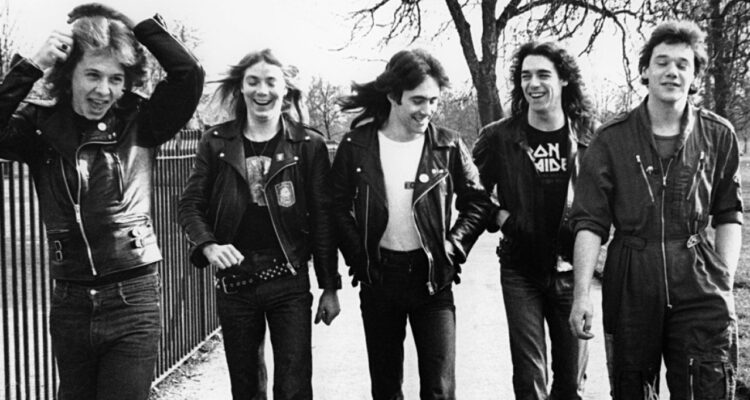
Ex-Iron Maiden guitarist Dennis Stratton joined the band in 1979, did one album and tour with the band, and exited a mere 10 months later. While a small dot on an otherwise ginormous history, his contributions to the self-titled debut Iron Maiden were a big part of the twin guitar harmony sound that Maiden would become known for from then on. Dennis Stratton had some things to say about the new Iron Maiden documentary, Burning Ambition.
Stratton had the opportunity to see Iron Maiden: Burning Ambition for the first time at the London premiere on May 5th, and he said, “When you’re watching it for the first time, it’s a lot to take in. But because I had the pleasure of watching it twice, on a Thursday [May 7] as well in Belgrade [Serbia], there was things that I missed on the Tuesday that I picked up on the Thursday.
“I’d never met Blaze [Bayley, former IRON MAIDEN singer] before until we got on the red carpet [at the London premiere], and Blaze was in front of me. And he turned around, and we had a hug, and we had some photos done together. And we said, ‘We finally meet after all these years.’ And we had a long chat. It was great. But at the same time, watching the film, I felt really sorry for Blaze, because the way it was narrated, it was as if the minute Blaze joins the band, they go downhill.
People start burning records. People start talking about this devil cult, and then they’re playing clubs. And I thought, ‘Hold on a minute. This is, this is angling towards… ‘ It sounds like that Blaze is getting the blame for the band going downhill, which it was nothing like that. Blaze did — I think it was three albums, really good albums.
As Steve [Harris, IRON MAIDEN bassist and founder] said to me on the phone, he contributed towards them albums. So you gotta take your hat off to Blaze for walking into the boots of Bruce [Dickinson, longtime MAIDEN vocalist] and then trying to pick up where Bruce left off. It’s a killer job. And the way that was portrayed was, like, ‘Oh, now they’re playing in clubs.’ And then the punchline was when Bruce came back and Steve said, ‘Why do you wanna come back?’ He went, ‘Because I’m fed up playing small shows. I wanna play big shows.’ So it was as if the minute Bruce came back, the band was massive again. It didn’t sort of like jell in a friendly kind of way, if you know what I mean.’
Stratton also believes that the band’s “early days,” which he was a part of, were glazed over and not really given as much attention as they deserved. “I don’t want the MAIDEN family or the MAIDEN fans saying ‘it’s sour grapes’ or ‘he’s got the hump because he’s [not in the band].’ I haven’t. It’s a film for the fans. I’m proud of what I did in MAIDEN first couple of years, and also what I took into it and working on them early songs. Because, yes, in 1979, it’s said many times that the band was very punky and very aggressive, and that’s how we liked it. But you still had to have a bit of class, and that’s when separating them guitars and adding a couple of little vocal harmonies, that’s when you start making the songs a bit more interesting, not so punky, not so raw. And that’s what I’m pleased about. The fact is we’d worked on them first two albums, and I think they’d come out pretty well. So, as I say, the film’s fantastic for the fans, but for me, [it’s] just a little bit sad that they rushed through the early days, that’s all.”
https://www.youtube.com/watch?v=BggdJLnSevQ
About The Author
